
Women’s History Month 2026 | Kenco Sustainability Leadership
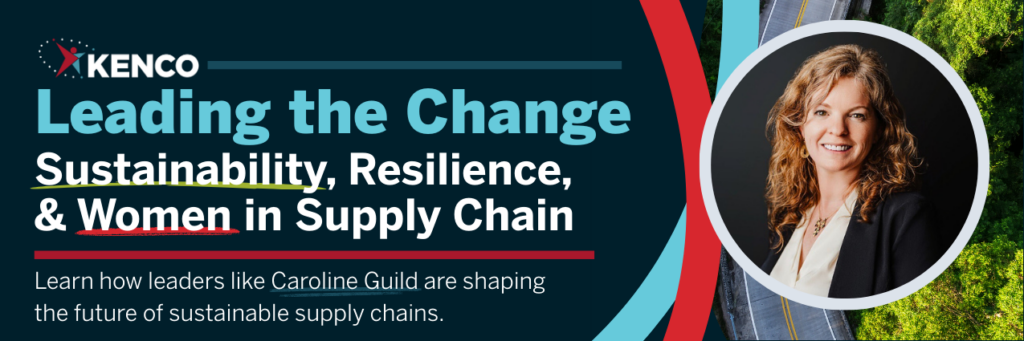
The National Women’s History Alliance has named the 2026 Women’s History Month theme: “Leading the Change: Women Shaping a Sustainable Future.” (source)
The theme honors women who are rebuilding systems for long-term sustainability across environmental, economic, and social dimensions — creating a future rooted in resilience and equity.
In the third-party logistics industry, that work is happening in real time.
At Kenco, sustainability leadership is not theoretical. It is operational, measurable, and embedded into how we build and strengthen supply chains. As Sustainability Manager, Caroline Guild is helping shape a more resilient and responsible logistics future through structured governance, operational integration, and long-term ESG strategy.
Watch the Full Interview
Sustainability leadership in the 3PL industry requires influence, structure, and measurable outcomes. In the video below, Caroline Guild outlines how data-driven initiatives and collaborative execution are helping embed sustainability into day-to-day supply chain operations.
The conversation doesn’t stop here. Read on to discover how Caroline Guild’s experience, values, and leadership approach are influencing the future of sustainable logistics at Kenco.
A Career Rooted in Impact
Caroline Guild’s path to sustainability leadership began outdoors.
Growing up surrounded by parks, travel, and nature sparked her interest in environmental science. That early influence led to an undergraduate degree in environmental science and a career spanning more than 20 years in environmental chemistry, compliance, and regulatory management. A conference breakout session later connected her to the graduate program where she earned her master’s degree in sustainability, and that ultimately led her to Kenco.
At Kenco, she found the opportunity to put into practice what she had studied and advocated for: building systems that balance operational excellence with environmental and social responsibility.
Her motivation remains personal and forward-looking.
“I want everyone, including my children’s generation, to experience the natural world as it’s intended. If we don’t start making changes, those opportunities will sadly fade.”
That long-term lens shapes how sustainability is integrated into Kenco’s supply chain operations today.
Why Sustainability Matters in the 3PL Industry
Logistics is foundational to the global economy. All warehouse operations, transportation routes, and supply chain decisions carry environmental and social implications.
In the 3PL environment, sustainability is not a side initiative. It is a systems-level challenge that requires structured leadership, disciplined execution, and measurable outcomes.
Guild’s background in environmental science, combined with two decades of experience, informs her understanding of how logistics decisions can create a generational impact. Sustainability in this industry requires influence across functions, long-term planning, and the ability to connect strategy with execution. Which is why Kenco considers itself lucky, to have someone like Caroline Guild leading the change.
In addition to supporting environmental stewardship and social responsibility, sustainability also strengthens business performance. It helps organizations manage climate and regulatory risks, align with evolving customer expectations, remain competitive with industry standards, and identify opportunities to add value while reducing operational costs.
Kenco’s culture of innovation creates the flexibility and resilience needed to turn sustainability goals into practical action, driving meaningful change within our own operations while helping partners and stakeholders advance their sustainability objectives as well.
What Sustainability Looks Like at Kenco
At Kenco, sustainability operates at both the macro and micro levels, mirroring the way economics connects system-wide forces with individual decisions.
Governance and Strategic Foundation (The Macro)
Over the past several years, Kenco has focused on building a strong ESG foundation. That includes governance structures, policy development, transparent reporting, and measurable tracking systems.
“The last few years have been about building a solid foundation. Policies, tracking mechanisms, and transparency are critical. That foundation ensures our sustainability program matures responsibly and strategically.”
This top-down structure ensures sustainability efforts are consistent, measurable, and aligned with long-term business performance.
Operational Integration (The Micro)
At the operational level, sustainability shows up in programs, practices, data tracking, and incremental improvements across warehouse and transportation networks.
Guild emphasizes that meaningful change in logistics rarely happens through one sweeping initiative. It requires methodical, incremental improvements — understanding which operational levers to pull across a large and complex organization.
“Sustainable change requires collaboration from leadership, internal departments, customers, and partners. This is not a one-sided operation. In the end, we are all working toward a common purpose — environmental responsibility, employee wellbeing, ethical business practices, and stronger communities.”
Kenco’s resilience is also a differentiator. The company’s ability to adapt through fluctuating market conditions demonstrates a culture built on adaptability. That same adaptability positions Kenco to integrate sustainability in a way that strengthens, rather than disrupts, operations.
Leading as a Woman in a Traditionally Male-Dominated Industry
The logistics industry has historically been male dominated. Sustainability leadership within that environment requires influence, credibility, and collaboration.
Guild approaches leadership through preparation and data-driven decision-making.
“When you come to the table with facts, data, and compelling evidence, you create space for meaningful conversation. Leading with confidence and clear purpose opens the door for constructive planning and decision making.”
Influence without direct authority is often part of sustainability roles. Building trust is essential.
“Strong rapport is key. Being authentic, empathetic, and open to communication fosters trust. That trust is what allows sustainable change to take root.”
Women continue to shape the evolution of supply chain leadership by bringing systems-thinking, collaborative problem-solving, and an increased focus on workforce wellbeing, inclusion, and ethical governance.
Collaboration as a Competitive Advantage
Sustainability does not succeed in isolation. It requires cross-functional engagement across operations, finance, HR, customers, and partners.
Guild underscores the importance of shared accountability.
“Communication and education are essential for advocating long-term change. Increasing clarity around sustainable development helps teams understand the timelines and methodical approaches required to achieve progress.”
At Kenco, ESG priorities are aligned with the industries and customers we serve. That alignment creates shared goals, measurable outcomes, and a clear path toward responsible growth.
This integration differentiates Kenco within the 3PL landscape.
The Future of Sustainable Supply Chains
The future of sustainability in logistics presents significant opportunities.
Emerging technologies, improved measurement systems, supplier collaboration, and transparent reporting are reshaping expectations across the industry.
Guild sees innovation as a key driver.
“There are countless opportunities to explore, measure, track, and communicate impact. Innovation is advancing daily, especially at Kenco, and we are positioned to be adventurous while developing new strategies and put them into action.”
Guild also acknowledges that she is seeing women playing a critical role in shaping more resilient and responsible supply chains. Which includes the increased attention to inclusion, employee voice, mental health, supplier diversification, and waste reduction continues to influence operational strategy across the industry.
Leading the Change
Sustainable supply chains require intentional leadership. At Kenco, leadership like Caroline Guild’s demonstrates what it means to build resilience through strategy, collaboration, and measurable progress. She is a true testament that women in logistics are creating systems that prioritize resilience, accountability, and equitable growth.
Key Takeaways for Shaping a Sustainable Future:
- Invest in people
- Build data-driven strategies
- Prioritize cross-functional collaboration
- Commit to long-term impact
- Align internal and external stakeholders
That is what leading the change looks like in practice.
Learn More About Kenco’s Sustainability Practices
Kenco continues to advance sustainability in logistics through measurable action and transparent ESG reporting.
- Visit the Kenco Sustainability page
- Check out the 2025 Sustainability Report
Building a sustainable supply chain is an ongoing journey. At Kenco, that journey is rooted in leadership, accountability, and progress that can be measured and sustained.